
ARTEX and the ConnectWise Breach: What an Open-Source AI Attack Framework Changes
Microsoft says a China-aligned group used an agent-based testing framework to target more than 2,250 tenants. The tool is new, but the lessons for defenders are familiar.

In this story 10 sections
Microsoft says a China state-aligned group it tracks as Storm-0940 used ARTEX, an open-source framework of LLM-driven agents, to automate attacks against hundreds of organizations and to reach privileged cloud access in under three hours in some cases. The attack did not exploit a flaw in Microsoft's products. What changed is speed and scale, not the basic techniques.
The story is easy to read as a leap in attacker capability. The details are more useful than the headline. Emergent Wire covers what AI tools can actually do against the claims made about them, and this analysis is for engineers, IT teams and security buyers who want to know what ARTEX proves, what it does not and what to check in their own environments.
What Is ARTEX?

ARTEX is a penetration testing framework built on several cooperating AI agents. According to Microsoft's threat intelligence report, it is open source, can use any AI model and can run an autonomous test from reconnaissance through data exfiltration with little human input. It stores discovered assets and vulnerabilities in a graph.
In plain terms, it is an agent framework applied to security testing. One agent scans, another interprets results, another plans the next step, and a shared memory keeps track of what has been found. That architecture is the same pattern developers use to build coding and research agents.
Penetration testing tools exist to help defenders find weaknesses before attackers do. Like many dual-use tools, they work for either side. ARTEX's open-source license means anyone can download and configure it.
What Did Storm-0940 Actually Do?
Microsoft says Storm-0940 has been active since 2021 and began using ARTEX as early as September 2026. The group is assessed to be behind the compromise of ConnectWise's multi-tenant cloud backup application, per the same report.
The attack used application identities, the credentials software uses to sign in to cloud services. After compromising ConnectWise application identities, the actor authenticated to customer Microsoft 365 tenants without an interactive user sign-in. Follow-on activity in some environments included reconnaissance, changes to application credentials and attempts to modify privileges.
ARTEX sped up scanning, reconnaissance, password spraying and abuse of OAuth applications. Microsoft states the activity did not result from a flaw in its own systems or products.
How Big Was the Campaign?

The scale is the notable number. Microsoft says Storm-0940 attempted sign-ins to more than 2,250 tenants. A Reuters report, as carried by KFGO, says the campaign targeted hundreds of organizations in sectors including defense, energy, financial services, government and technology.
Most targeting failed. In one password-spray campaign between October 10 and 14, 2026, Microsoft observed more than 151,000 failed logons against 327 accounts at eight organizations and no successful authentication. That is a lot of effort with no payoff in that case.
But some attempts worked. Microsoft says the actor achieved privileged cloud persistence, meaning access that could survive cleanup efforts, at many organizations. In several cases, the time from first targeting to privileged access was under three hours.
Microsoft also cautions that an affected app or successful sign-in does not by itself prove data was accessed or exfiltrated.
What Is Actually New Here?
Automation is the new part. The techniques, password spraying and abusing application permissions, are old. What changes is how fast and widely one team can run them. A small group using agents can attempt thousands of targets in parallel, adapt when something fails and keep a running map of what it has learned.
That compresses the window defenders have to notice and respond. A three-hour path to privileged access is shorter than many organizations' alert review cycles. Slow detection that was acceptable a few years ago is now a real exposure.
It also lowers the skill needed. The framework handles planning and sequencing, so an operator needs less expertise to run a broad campaign. That is a general effect of agent tooling, which our explainer on AI agents that use tools describes from the builder's side.
What Is Not New?
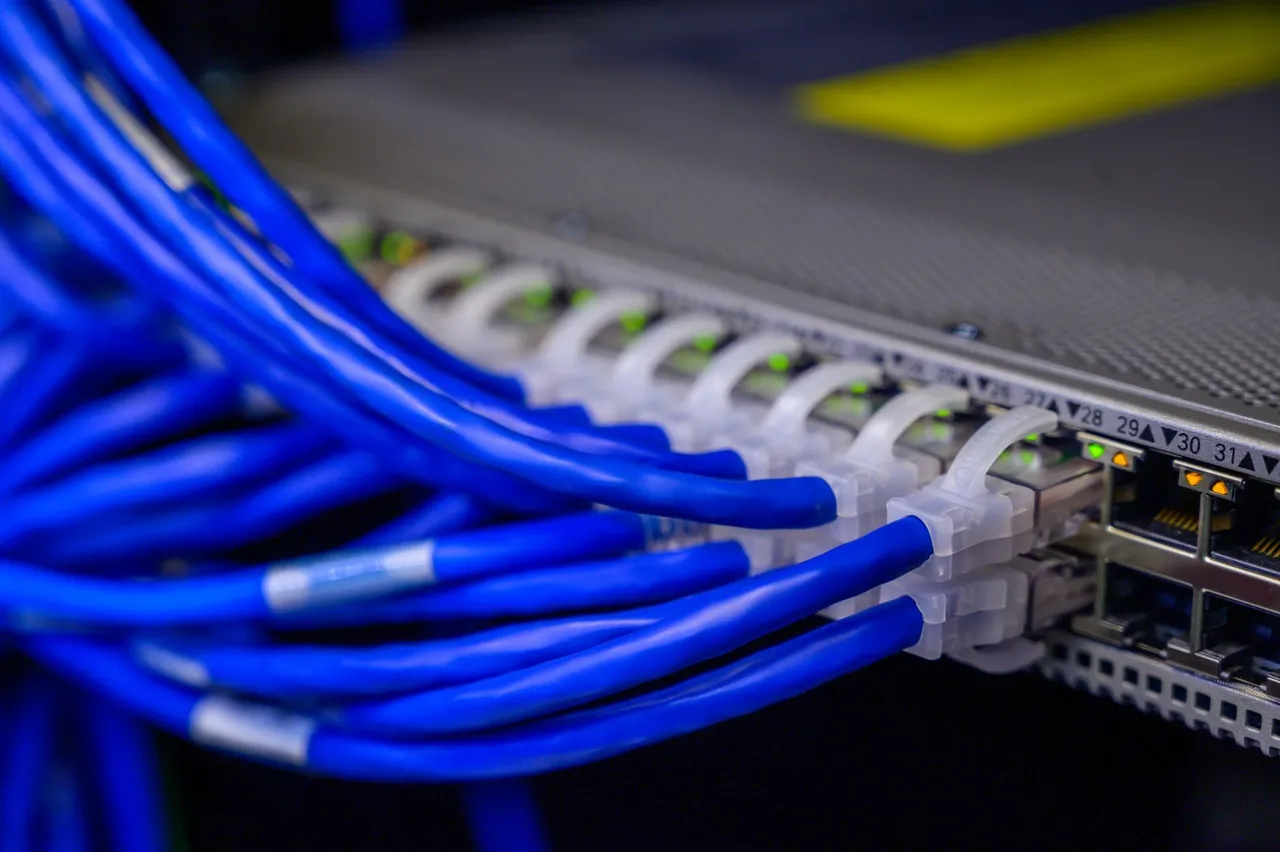
The entry point is not new. This was a supply chain compromise: attackers went through a trusted vendor's application identities to reach many customers. Microsoft says the attack exploited those identities, not a product flaw. The core lesson is about trust in third-party integrations.
The framework also does not make attacks guaranteed. Most targeting in the observed campaign failed. Good controls, such as strong authentication and limited app permissions, still stop a lot of it.
It is also worth separating the capability claim from the marketing. Calling something agentic is easy, and the term gets stretched a lot, as we wrote in why agentic AI became 2026's most overused term. Here the evidence is concrete: Microsoft's telemetry shows the speed and scale, and it names the tool.
What Should Defenders Check Right Now?
Microsoft's guidance is specific, and most of it is ordinary security hygiene done carefully. The key steps from the report:
- Keep affected ConnectWise connections disabled until ConnectWise issues formal restoration instructions.
- Preserve configuration and evidence before making irreversible changes, and do not delete enterprise applications as the first response.
- Search for affected application IDs rather than display names, including integrations no longer in use.
- Review service principal sign-ins and Microsoft Graph activity from at least October 15, 2026, extending to October 1 where records exist.
- Check Entra audit logs for new credentials, owners, role assignments, consent grants and privileged role changes.
- Revoke unnecessary permissions and rotate credentials after confirmed suspicious activity.
ConnectWise's chief executive, Manny Rivelo, said the company has contained the affected connections and is restoring services in phases, per Reuters. He also said access already established inside individual customer tenants still needs separate review.
How Can Teams Judge Their Own Exposure?
Start with an inventory, because you cannot protect what you cannot list. Most organizations have far more connected applications than anyone remembers: backup tools, ticketing systems, monitoring agents and old trials that were never removed. Each one holds an identity with some level of access.
The password-spray numbers show why volume alone is not the problem. Microsoft counted over 151,000 failed logons against 327 accounts in one campaign, which works out to roughly 460 failed attempts per account. A tool that tries that hard is easy to spot if anyone is looking, and easy to miss if nobody is.
Three questions help. Which applications can read or write mail, files or directory data across your whole tenant? Who approved those permissions and when? And would your team notice a new credential added to one of them tonight? If the answer to the last question is no, detection is the first fix.
What Should Vendors and Customers Ask Each Other?
This incident puts third-party integrations back at the center of risk reviews. A backup or management tool that connects to many customers is an attractive target, because one compromise can open many doors.
Customers should ask vendors how application credentials are stored, how quickly they can be rotated and whether permissions can be limited to the minimum needed. Vendors should ask customers to review and trim consent grants regularly, and should publish clear steps for revoking and restoring access.
Both sides benefit from a rehearsed plan. When ConnectWise contained affected connections and began restoring services in phases, customers still had to decide when to reconnect and how to verify nothing had changed. A written runbook turns that from a scramble into a checklist.
What Does This Mean for People Building AI Agents?

Builders should treat agent frameworks as powerful, dual-use software. The same planning, memory and tool-calling patterns that make an agent useful for a developer make it useful for an attacker. Our comparison of AI agents versus AI assistants explains why the autonomy is the point.
Practical safeguards matter. Limit what credentials an agent can hold, log every tool call and require approval for risky actions. These are sensible defaults for any agent, whether it is writing code or testing a network.
The incident also shows why least privilege matters for the identities agents use. An application identity with broad permissions is a larger target than a narrowly scoped one, no matter who is operating it.
One last point on tone. Neither alarm nor dismissal fits the evidence. The campaign was large, but most attempts failed, and the successful ones leaned on weak points that careful teams can close. That is a manageable problem, and the sooner organizations treat agent-driven attacks as ordinary risk, the better their odds.
The Bottom Line on ARTEX
ARTEX shows that agent frameworks have arrived in real intrusion campaigns, with measurable gains in speed and scale. It also shows that the weak points are familiar ones: third-party integrations, over-permissioned application identities and slow detection.
At Emergent Wire, our editors will follow further disclosures from Microsoft and ConnectWise. Your next step is to list every third-party application with access to your Microsoft 365 tenant this week and remove the ones you do not recognize or no longer use.