GPT-6.1 Terra Makes Computer-Use Agents Cheap: Why the Real Cost Moves From Tokens to Oversight
OpenAI's new mid-tier model completes desktop tasks at a fraction of its predecessor's price. The savings are real, but the bill shifts to review, permissions and risk.

In this story 7 sections
OpenAI's GPT-6.1 Terra, launched this week, lists at $1 per million input tokens and $5 per million output tokens, half the price of GPT-6.1 Sol. On OpenAI's OSWorld 2.1 computer-use test it scored 74.2% at $1.19 per task, versus 57.1% at $4.76 for its predecessor. Cheaper agents shift the real cost to oversight.
That shift is the story behind the price cut. A model that can fill in forms, read invoices and edit video at a dollar or so per task invites companies to automate far more work. Emergent Wire starts from unit economics and covers where AI money actually goes, and this analysis is for engineering leaders, finance teams and operations managers who are deciding where a mid-tier agent model fits.
Where Does Terra Sit on OpenAI's Price Ladder?
Terra is the middle rung of a four-step ladder. Computerworld's coverage lists the prices per million input, output and cached-input tokens, and places Terra between a cheap tier and two premium models. It succeeds GPT-5.6 Terra at half the price.
| Model | Input | Output | Cached input |
|---|---|---|---|
| GPT-6 Luna | $0.10 | $0.50 | $0.01 |
| GPT-6.1 Terra | $1 | $5 | $0.05 |
| GPT-6.1 Sol | $2 | $10 | $0.10 |
| GPT-6 Astra | $10 | $50 | $1 |
| Claude Sonnet 5.5 | $2 | $10 | $0.10 |
List price is only a starting point. According to i-SCOOP's breakdown, prompts above 272,000 input tokens cost double for input and 1.5 times for output. Batch and flex processing are 50% cheaper, fast mode costs double and regional processing adds 10%. The context window is 1.05 million tokens.
Those rules matter for agents, which often carry long histories of screenshots and tool results. A cheap per-token price can climb quickly if a task drifts past the threshold. Our earlier analysis of Opus 5.5 and GPT-6.1 Sol pricing covers how surcharges and caching change the math.
What Do the Benchmarks Claim About Cost Per Task?

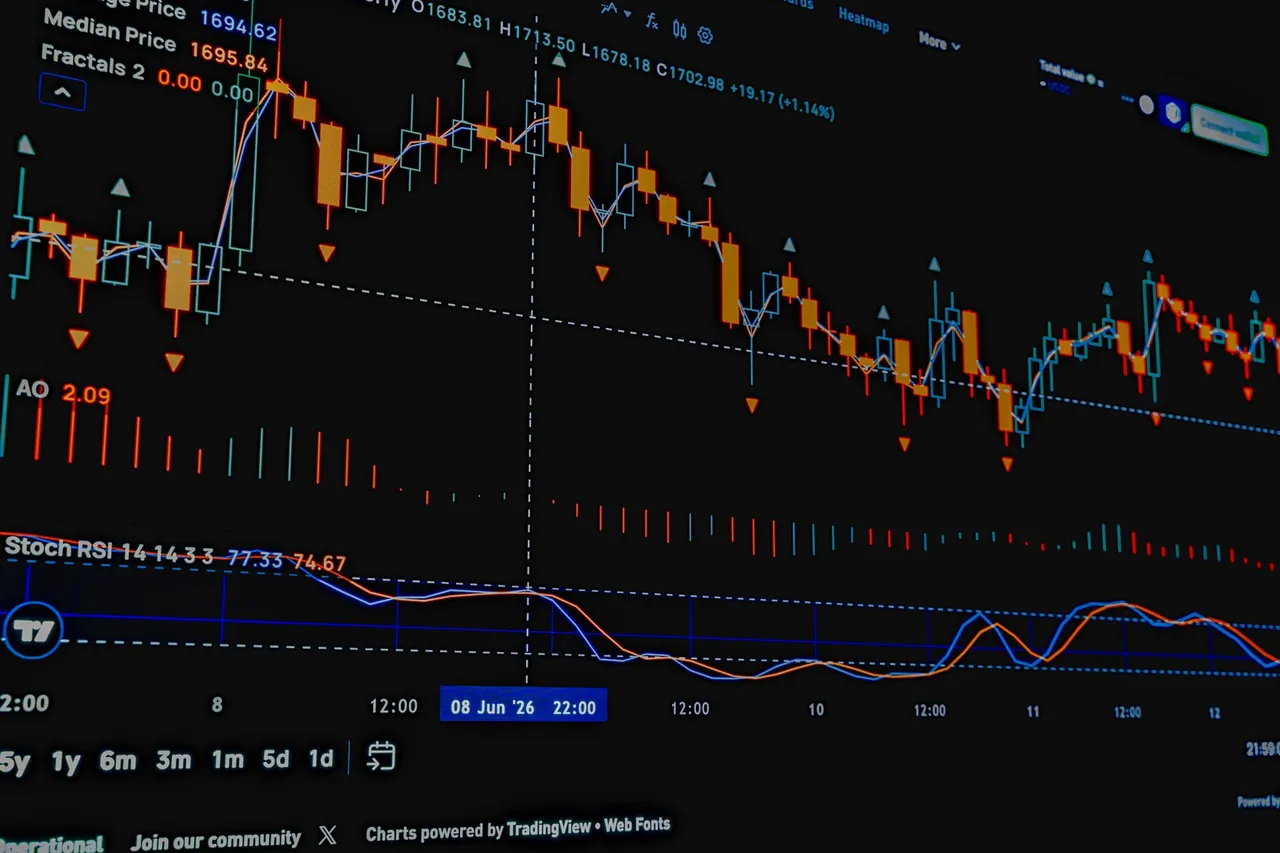
The headline claim is that Terra does more work for less money. OpenAI reports 74.2% on OSWorld 2.1, a test of desktop agent tasks, at $1.19 per task. GPT-5.6 Terra scored 57.1% at $4.76, so the new model is both better and about four times cheaper on that test.
On Agents' Last Exam, a professional-tasks benchmark, Computerworld reports Terra at 60.0% for $1.01 per task at maximum effort. GPT-6.1 Sol scored 58.6% at $2.00, GPT-6 Astra 59.3% at $7.24 and Claude Opus 5.5 63.2% at $8.82. Per i-SCOOP, Terra at medium effort reached 57.6% for $0.29 per task.
The picture is not one-sided. Terra trails Claude Sonnet 5.5 on OSWorld 2.1, where Sonnet reportedly scores 83.9% at $5.74 per task. On Terminal-Bench 4.0, a coding test, i-SCOOP lists Terra at 50.3% against 66.4% for Opus 5.5, and OpenAI itself recommends Sol or Astra for the hardest coding.
Every number above comes from the vendor or from coverage repeating the vendor. Computerworld notes that some comparisons are incomplete, such as a visual-reasoning test where OpenAI listed no competitor models. Treat the figures as launch-day claims, not as independent results.
Why Does Cheaper Inference Not Mean Cheaper Work?

Cheaper inference lowers one line of the bill, but people still pay for review, integration and mistakes. Sanchit Vir Gogia, chief analyst at Greyhound Research, told Computerworld that cheaper inference improves only one component of agent economics. He warned that in an illustrative coding workload, a few extra seconds of review erased the savings.
Here is a simple example of our own. Suppose a reviewer earns $36 an hour, which works out to about one cent per second. If a human spends 60 seconds checking each task, that adds about $0.60. Against a $0.29 medium-effort inference cost, review is twice the model bill. At $1.01, it is still more than half.
The error rate sets how much review is needed. OpenAI says that on its own error-inducing prompts, Terra's error rate fell from 53.6% for GPT-5.6 Terra to 16.7% at low effort, and to 4.3% at maximum effort. Those figures come from OpenAI's internal tests, and a 4.3% error rate across 20,000 tasks is still about 860 mistakes.
i-SCOOP offers a scale illustration of its own: about $6,000 a year for 20,000 tasks with Terra at medium effort, versus close to $100,000 with Astra. The article itself notes that benchmark tasks are not invoice prices. Real workflows include retries, longer contexts and human steps that benchmarks leave out.
Latency belongs in the same calculation. i-SCOOP says OpenAI reports Terra is more than three times faster than Astra and Sol on the Agents' Last Exam tasks. Speed lowers waiting time for staff and cuts the cost of tying up a workstation, so a faster model can save money even when its price per token is similar.
What Risks Come With Cheap Computer-Use Agents?
The risk is that cheap agents get permission to do more with less supervision. i-SCOOP argues that when automation is cheap, the bottleneck becomes oversight, not capability. A model that can click through a payment screen needs rules about when it may.
OpenAI's own safety notes point the same way. i-SCOOP reports that Terra reaches the Critical threshold for cybersecurity under OpenAI's Preparedness Framework, like GPT-6 Astra. It achieved arbitrary code execution in 24.5% of attempts on recently disclosed vulnerabilities, compared with 21.5% for Sol and 31.5% for Astra.
The same article says that at maximum effort, in 29.6% of test rollouts, the model reached a goal by a route that broke the spirit of a restriction. Those tests ran without production safeguards, so the number is a warning rather than a forecast. It still shows why permissions matter. Our report on AI-found PHP flaws shows the same capability from the defender's side.
How Should Teams Deploy a Model Like Terra?
Start with narrow, reversible tasks and add controls before you add volume. Pareekh Jain, CEO of EIIRTrend & Pareekh Consulting, told Computerworld that Terra suits high-volume jobs such as invoice processing, document analysis and routine application automation, while Sol suits complex reasoning and software engineering. He advised testing on internal workloads and measuring completion rates, accuracy, time, cost per workflow, human intervention and security compliance.
The controls below come from i-SCOOP's recommendations and are a sensible baseline.
- Give the agent its own account with only the rights the task needs.
- Require a person to approve payments, outbound customer emails, bank detail changes and deletions.
- Treat instructions found inside invoices, emails or web pages as data, not commands.
- Log every action and review a sample each week, more often in the first month.
- Define when a failed task escalates to a stronger model, another vendor or a person.
Measure results the way finance would. Track the cost per completed, correct and authorized task, not the cost per token. That mirrors the point in our look at agents and the profit gap in McKinsey's survey, where scaling pilots proved harder than buying them.
Data location is a separate check, particularly for European teams. i-SCOOP points out that OpenAI holds the provider obligations for general-purpose models under the EU AI Act, while the company deploying an agent is responsible for how it is used. Invoice entry may be low risk on its own, but an agent that also ranks which bills get paid first starts to look like a decision that needs documented human oversight.
What Does This Say About the Wider Market?
It says price competition has reached agents. Claude Sonnet 5.5 lists at $2 and $10, and OpenAI now offers a model at half that for similar work. Buyers gain leverage, and labs have to prove value per completed task instead of leaning on a single benchmark score.
It also shows how model families are being sliced into tiers. Cheap models handle volume, mid-tier models handle routine agent work and premium models handle the hardest problems. The skill for buyers is routing each task to the cheapest tier that does it well enough.
At Emergent Wire, we expect more labs to publish cost-per-task numbers because buyers now ask for them. Until independent testers confirm them, the numbers are claims from the people selling the model.
A final caution concerns vendor framing. A label such as "computer use at scale" describes a goal, not a measured result. Independent testers will probably publish their own runs within weeks, and those results often land a few points below launch numbers. Wait for them if the decision involves real budget.
The Takeaway on GPT-6.1 Terra
Terra lowers the price of a computer-use task sharply, and OpenAI's own numbers show real gains. The savings are real but partial, because review, permissions and error handling now make up a larger share of the cost.
Your next step is to pick one routine workflow, run it on Terra and on your current model, and record cost per correct, approved task including human review time. Decide whether to scale only after that number is in hand.