OpenAI's $30 Billion Raise Meets Anthropic's IPO: What the Valuations Imply
OpenAI wants to close a $1.4 trillion round before Anthropic lists. Here is what has been reported, what the numbers imply, and what is unconfirmed.

In this story 7 sections
OpenAI is seeking about $30 billion at a valuation above $1.4 trillion, Reuters reported on October 19, 2026. The company wants to close before Anthropic's expected mid-November stock listing. The deal is unsigned. It will test whether public investors price AI companies the way private ones have.
Two of the most valuable private companies in AI are about to compete for the same pool of money, and the timing is not an accident. Emergent Wire covers the business and strategy side of the AI industry, and this explainer walks through what is reported, what the numbers imply, and what remains unconfirmed.
It is written for readers who follow AI companies as a business story, including founders, analysts, and anyone trying to make sense of headline valuations. It is not investment advice.
What Has Actually Been Reported
According to a 24/7 Wall St. summary of the Reuters report, OpenAI is seeking roughly $30 billion from existing backers and new investors, citing people familiar with the matter. The round could value the company at more than $1.4 trillion, up from $852 billion in March. SoftBank Group and Abu Dhabi's MGX are in talks to participate, and OpenAI and SoftBank declined to comment.
Additional detail comes from Tech Funding News, which reports that OpenAI is presenting $1.4 trillion to investors as a fixed pre-money price and has not settled on a lead investor. BlackRock and the University of California's endowment are also reported to be in talks.
The March round, for comparison, raised $122 billion at $852 billion and was anchored by Amazon, Nvidia, and SoftBank. Amazon committed up to $50 billion of it.
The reporting also names a likely use of proceeds. People familiar with the plans told Reuters that OpenAI needs cash for infrastructure commitments. That points to data centers, chips, and power contracts, not product development alone, and it explains why the raise is large relative to even the March round.
Two facts are still unconfirmed. Neither the final amount nor the final valuation has been announced, and none of the reporting names a signed term sheet. Treat the headline figures as targets.

Why Is OpenAI Raising Before Anthropic Lists?
OpenAI is reportedly raising now for two reasons: it needs cash for infrastructure commitments, and it wants a cushion in case weaker IPO markets delay its planned 2027 listing. The timing also keeps it ahead of a rival tapping a similar investor base.
Reuters sources say both labs are approaching long-only funds and sovereign wealth funds. OpenAI met investors the same week Anthropic held its October 14 investor day. Some read the push as an effort to lock up money that might otherwise go to Anthropic.
A large raise before a rival's IPO also gives OpenAI a price anchor. If Anthropic lists at a lower valuation than the market expects, later OpenAI investors could ask for a lower price. Closing first fixes the number.
The compute bill is the other driver. Nvidia has said OpenAI's existing and planned commitments represent about 12 gigawatts of its compute. We covered how the compute buildout has become a power problem, and the cost of that buildout explains much of the appetite for cash.

What Do the Revenue Numbers Imply?
The revenue figures imply very high multiples, and they come with caveats. OpenAI reportedly told investors it reached $50 billion in annualized revenue after launching GPT-6 Astra, and expects $70 billion by the end of 2026. Those figures are unaudited. At $1.4 trillion, OpenAI would be valued at about 28 times its reported $50 billion run rate.
Annualized revenue means taking a recent month or quarter and multiplying it to a full year. It can overstate a business if demand is seasonal or if usage is growing from promotional pricing, so it is not the same as revenue booked over a year.
On the Anthropic side, the same reporting says the company reached roughly $65 billion in annualized revenue by July. Its quarterly revenue reportedly rose to $16.8 billion in the third quarter from $11.6 billion in the second, a gain of about 45%.
The table below puts the reported figures side by side. All of them are reported by news outlets, not audited by us.
| Measure | OpenAI | Anthropic |
|---|---|---|
| Latest valuation reported | $852B (March) | IPO target near $2T reported |
| Valuation being sought | Above $1.4T | Some investors argue about $1.5T |
| Annualized revenue | About $50B (unaudited) | About $65B by July |
| Expected timing | Round before mid-November | Listing mid-November |
| Own listing plan | 2027 | Mid-November 2026 |
Our analysis of what a million tokens costs in 2026 shows why revenue and margin are different questions. Revenue can climb quickly while the cost of serving each request stays high.
How Should You Read a 28x Revenue Multiple?
A revenue multiple divides a company's valuation by its sales. At $1.4 trillion and $50 billion in annualized revenue, the multiple is 28. That tells you how many years of current sales an investor is paying for up front.
A high multiple can be reasonable if revenue grows fast. If revenue reaches the $70 billion that OpenAI projects for year-end, the same valuation drops to 20 times the projected figure. If growth stalls, the multiple stays high and the price looks aggressive.
Investors also look at gross margin, which is the share of revenue left after the cost of serving customers. For AI labs, serving costs are large because every response uses expensive chips and electricity. A lab with 28 times sales and thin margins is a different bet from a software company with the same multiple and high margins.
That is why the next disclosures matter. An IPO filing normally includes audited revenue, costs, and commitments, which lets investors see margin directly. Until then, headline multiples are best treated as a rough guide.

Why Are the Labs Disputing Each Other's Revenue?
The dispute comes down to accounting. OpenAI has accused Anthropic of inflating its revenue by counting the full value of contracts sold through third-party cloud providers. Anthropic says it follows established accounting practices.
The difference is between gross and net revenue. If a company sells through a cloud marketplace, it may book the entire contract as revenue, or only its share after the cloud provider's cut. Both approaches can be allowed under accounting rules in different circumstances, and they produce different totals.
This matters because public investors will see audited statements in an IPO filing, and private investors have mostly seen company-supplied figures. A gap between the two can move a valuation. We cannot judge who is right from the outside, and the reporting does not provide enough detail to decide.
It also helps to remember that both companies have commercial reasons to present their numbers favorably. A careful reader should compare definitions, not just totals.
What Does the Market Backdrop Mean for These Deals?
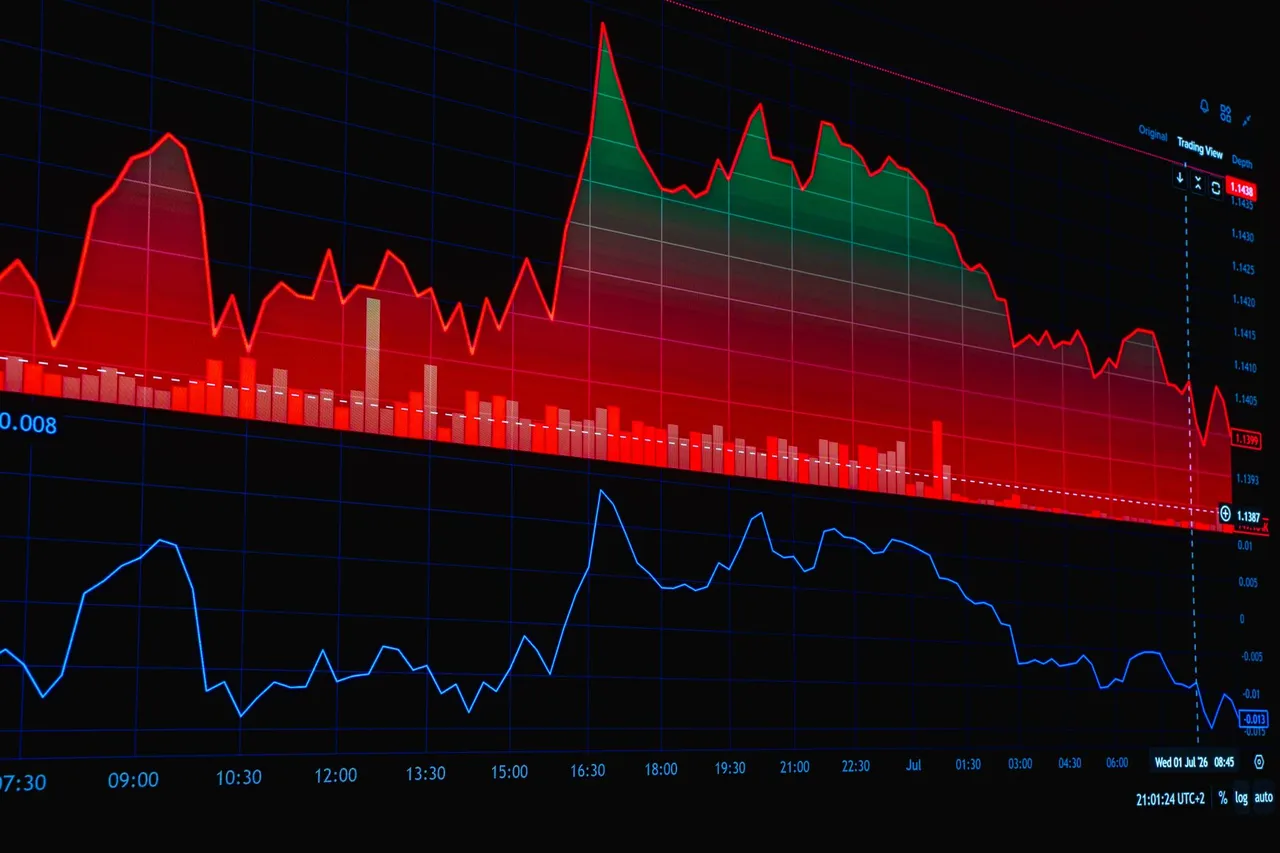
The backdrop is less friendly than it was in March. Reuters reports that the Philadelphia Semiconductor Index lost more than $1.6 trillion in market value in under two weeks. Neocloud operator CoreWeave, with about $50 billion in debt, saw its shares and bonds fall amid worries about AI data-center financing.
Several companies have also pulled or paused listings. Bankers say some are waiting until after Anthropic lists, which makes that listing a barometer. Edward Best, a lawyer at Willkie Farr and Gallagher who is not involved in the deals, said it is really a two-horse race in terms of being public.
One analysis in the reporting argues that an Anthropic IPO priced below $1.5 trillion would suggest public buyers are pricing AI lower than private rounds did. That is an opinion, not a fact, but it captures what investors will watch for.
For customers, there is a quieter implication. Companies building on these models should watch how financing affects pricing and capacity. Our analysis of why AI model prices keep falling explains the trend so far, but a capital-constrained lab might change its approach. Teams with large commitments should keep a second provider qualified.
What to Watch Over the Next Four Weeks
Four signals will show how this plays out. First, whether OpenAI names a lead investor and confirms a closing amount. Second, the price range Anthropic sets when it files. Third, whether the revenue accounting dispute draws a response in a filing. Fourth, whether the broader chip and neocloud selloff continues or eases.
For founders and executives who depend on these labs, the practical point is continuity. Both companies are spending heavily to serve customers, and their financing affects pricing and capacity. Our piece on the AI talent war and compensation shows another place where capital flows into the industry.
At Emergent Wire, our editors will update this explainer as terms are confirmed. For now, read every number here as reported, unaudited, and subject to change.