The DHS DeepSeek Order Explained: What Federal Agencies and AI Vendors Must Do
Homeland Security has ordered civilian agencies to remove DeepSeek products, including third-party tools built on its models. Here is what the order covers and what it leaves open.
In this story 10 sections
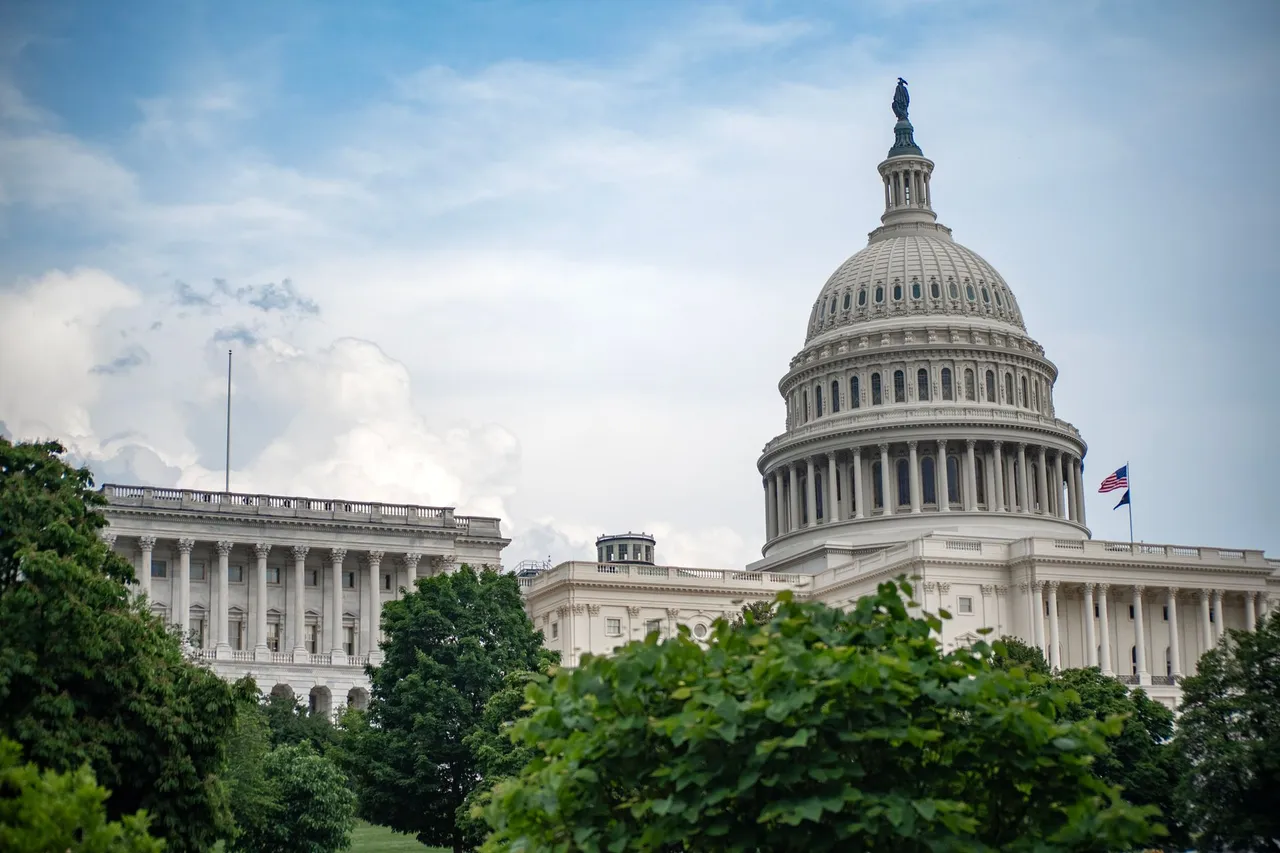
The Department of Homeland Security has ordered U.S. civilian federal agencies to remove DeepSeek products from their IT systems and stop buying them, including third-party tools built on DeepSeek technology. The order, issued under the Federal Acquisition Supply Chain Security Act, does not restrict companies or the public. Its biggest unknown is what counts as built on DeepSeek.
The order was signed in July and made public this week, and it is already forcing agencies and their vendors to check what sits under the hood of their AI tools. Emergent Wire covers the business and policy side of the AI industry, and this explainer is for agency buyers, government contractors and AI startups that sell into the public sector.
What Does the DHS Order Actually Say?
The order bars purchases and requires removal. According to TechCrunch, federal civilian agencies must stop buying DeepSeek products and services and remove them from government IT systems. It covers both new purchases and existing systems, and it reaches third-party products built on DeepSeek's technology.
The Hacker News reports that Homeland Security Secretary Markwayne Mullin signed the order on July 24, 2026 under the Federal Acquisition Supply Chain Security Act of 2018, known as FASCSA. It was filed for public inspection on October 19 and published in the Federal Register on October 20, an 87-day gap.
The named entity is Hangzhou DeepSeek Artificial Intelligence Co., Ltd., the developer of the R1 and V3 models, along with its affiliates. The Federal Register notice gives no reasons, though DHS has cited the risk that sensitive data from government users could be reachable by Chinese authorities under Chinese law.
Who Does the Order Apply To?
It applies to civilian executive branch agencies only. It does not restrict private companies or the public, and it does not directly cover the Defense Department or the intelligence community, which have their own officials under the same law. The Defense Secretary handles the Defense Department and national security systems, and the Director of National Intelligence handles the intelligence community.
A law passed in December 2025 already restricted DeepSeek's use in intelligence agencies' national security systems. This order extends limits to civilian agencies, per TechCrunch. Several agencies and states, including NASA, the Navy, the Pentagon and Texas, had barred DeepSeek from government devices earlier.
The practical audience is wider than agencies. Any company that sells software or services to a civilian agency may need to check whether its own stack touches DeepSeek models.
What Counts as a Tool Built on DeepSeek?

That is the open question, and it is a big one. The order covers products or services "developed using DeepSeek implementations," but the notice does not define the phrase. A vendor's software could fall under the order even if the word DeepSeek never appears in the product name.
Several readings are plausible. The narrow reading covers products that call DeepSeek's hosted service. A broader reading includes products that run DeepSeek's open model weights on their own servers. The broadest reading could sweep in models fine-tuned or distilled from DeepSeek models.
That matters because DeepSeek released open models that anyone can download and customize. Our explainer on open-weight versus closed models shows why that openness makes provenance hard to trace. A model inherits DeepSeek's weights, but its name may change several times along the way.
Until agencies or DHS clarify, vendors will probably choose the cautious reading. That favors suppliers who can document exactly where their models came from.
What Do Contractors Have to Do?
Contractors face specific obligations under a federal acquisition clause, FAR 52.204-30, as The Hacker News summarizes. Contractors may not provide or use covered products in performing a contract unless a waiver is granted. They must check the SAM.gov database for FASCSA orders at least every three months and make a reasonable supply chain inquiry when a new order could affect them.
If a contractor finds covered products, it must report them to the contracting officer within three business days. It must send mitigation information within ten business days after that report, and it must pass the clause down to subcontractors.
For existing contracts, the order applies only after the contracting officer adds it by amendment or modification. That gives some breathing room, but not much for vendors who expect updates soon.
Agencies can seek exceptions. Requests must be in writing and include a compelling justification, according to the same report.
Why Did DHS Act Now?

The order fits a longer pattern of concern about Chinese AI models. TechCrunch notes that a September U.S. report from the Cybersecurity and Infrastructure Security Agency (CISA) accused DeepSeek and five other Chinese AI firms, including Alibaba and Moonshot AI, of large-scale model distillation to extract information from American AI systems.
OpenAI told U.S. lawmakers it observed suspected DeepSeek distillation attempts, and Anthropic said it found unauthorized attempts by DeepSeek and other Chinese labs to collect Claude outputs. Distillation means training a smaller model on the outputs of a larger one, which our guide to model distillation explains in detail.
China's Foreign Ministry objected. Spokesperson Mao Ning said Beijing opposes "overstretching the concept of national security and politicizing technology and trade issues." Bloomberg reported that China is considering export controls on 23 AI-related technologies, according to TechCrunch.
How Does This Affect DeepSeek's Business?
The direct effect on revenue is probably small. U.S. federal civilian agencies were unlikely to be large DeepSeek customers, and the order does not touch commercial use. The signal is bigger than the sales impact.
It joins a string of events around the company. Our report on DeepSeek's $12 billion funding round and Shanghai IPO plan described a company expanding fast. Government restrictions in the United States could push it to depend more on China and other markets.
The risk is less to DeepSeek than to the companies that built products on its cheap open models. A startup that sells to government and runs on DeepSeek weights has a real compliance problem, and the fix means swapping its model.
What Should AI Vendors Selling to Government Do?
Vendors should audit their model supply chain now, before a contracting officer asks. A short checklist helps.
- List every model your product calls or runs, including fine-tuned and distilled variants.
- Trace each model's lineage and document where its weights came from.
- Check whether any subcontractor or plug-in uses DeepSeek technology.
- Set a quarterly reminder to search SAM.gov for FASCSA orders.
- Prepare a replacement model and a migration plan in case you need to swap.
- Ask your counsel how the undefined phrase applies to your product.
Documentation is a competitive advantage. Model cards that clearly state training data and lineage make it easier to answer a buyer's questions. Our look at AI model cards and what they disclose explains what good disclosure looks like.
How Does This Compare With Other AI Rules?
It is narrow compared with the broader regulatory wave. State legislatures are writing their own AI rules, as our report on state AI laws outpacing federal rules in 2026 shows, and the European Union's law applies across the market, as covered in our explainer on the EU AI Act in 2026.
The DHS order differs in type. It is a procurement restriction, not a regulation of AI development or use in general. It works through the government's purchasing power, which is one of the fastest tools it has to shape what vendors build.
Procurement rules can spread. Large companies sometimes copy government supply chain restrictions in their own vendor policies, so the effect could reach beyond agencies.
What Happens Next With the Order?
Several things are worth watching. The issuing official must notify the company and the relevant congressional committees, and must review the order at least annually, according to The Hacker News. The regulations set no deadline for releasing an order publicly, which is why this one surfaced months after it was signed.
There is also precedent. In 2025, the Director of National Intelligence used the same law to exclude Acronis, a Swiss cybersecurity company, from intelligence community procurement. That shows the tool is not reserved for one country or one technology.
Legislation is slower. Related House and Senate bills on DeepSeek had not advanced past committee as of October 21. For now, the executive order is the operative rule, and any broader ban would need Congress.
Finally, watch the guidance on the undefined phrase. A narrow answer would affect a handful of vendors. A broad answer could force a wave of model swaps across the government software market.
The Bottom Line on the DeepSeek Order
The order is narrow in who it binds and wide in the questions it opens. Agencies must remove DeepSeek products, vendors must trace what their tools are built on, and nobody yet knows exactly where the line falls for derived models.
At Emergent Wire, our editors will watch for any DHS guidance that defines the key phrase. Your next step, if you sell AI to government, is to map every model in your product and write down its origin before a buyer asks.