Small Language Models On Device: Where They Actually Win
Latency, privacy, and unit cost are real wins. Memory bandwidth and thermals decide whether any of it ships. A look at what runs locally in 2026.

In this story 6 sections
Small language models run in roughly 1 to 8 billion parameters and fit on a phone, laptop, or embedded device. They win on latency, privacy, and unit cost for narrow tasks like classification, extraction, and routing. They lose on open-ended reasoning, and no amount of quantization changes that.
The interesting number in on-device AI is not accuracy. It is milliwatts. A model that drains a phone battery in 40 minutes does not ship, whatever it scores.
That single constraint reshapes almost every decision below it. Product teams that start from an accuracy target and work backward toward hardware usually end up disappointed. The ones that start from the battery and thermal budget and work forward toward what model fits end up with something that actually reaches users.
This piece covers where small language models genuinely beat a cloud API in 2026, what the hardware actually allows, how quantization changes the tradeoff, and the deployment patterns teams are settling on. It is written for engineers deciding what runs locally and what stays in a datacenter.
What Counts as a Small Language Model
In 2026 the working definition is anything from about 1 billion to 8 billion parameters, trained or distilled to run on consumer hardware. Below 1 billion you are usually looking at a task-specific model rather than a general one.
Size on disk matters more than parameter count for deployment. An 8-billion-parameter model at 4-bit precision occupies roughly 4 to 5 GB, which fits a modern phone's storage comfortably and its memory budget uncomfortably.
Naming is inconsistent across vendors. A model marketed as small can mean anything from a 500-million-parameter classifier to a 14-billion-parameter model that needs a workstation, so check the parameter count and the quantized file size rather than the label.
Emergent Wire has seen this labeling gap trip up more than one procurement conversation. A team asks for "a small model" and gets three wildly different proposals back, because the vendors are each using the word to mean something different sized for their own product line.
These models are almost always distilled or heavily curated rather than trained from scratch at small scale. The recipe that produces a good 3-billion-parameter model usually starts with a much larger teacher model, a pattern documented extensively in the machine learning literature indexed on arXiv, the open-access preprint repository.
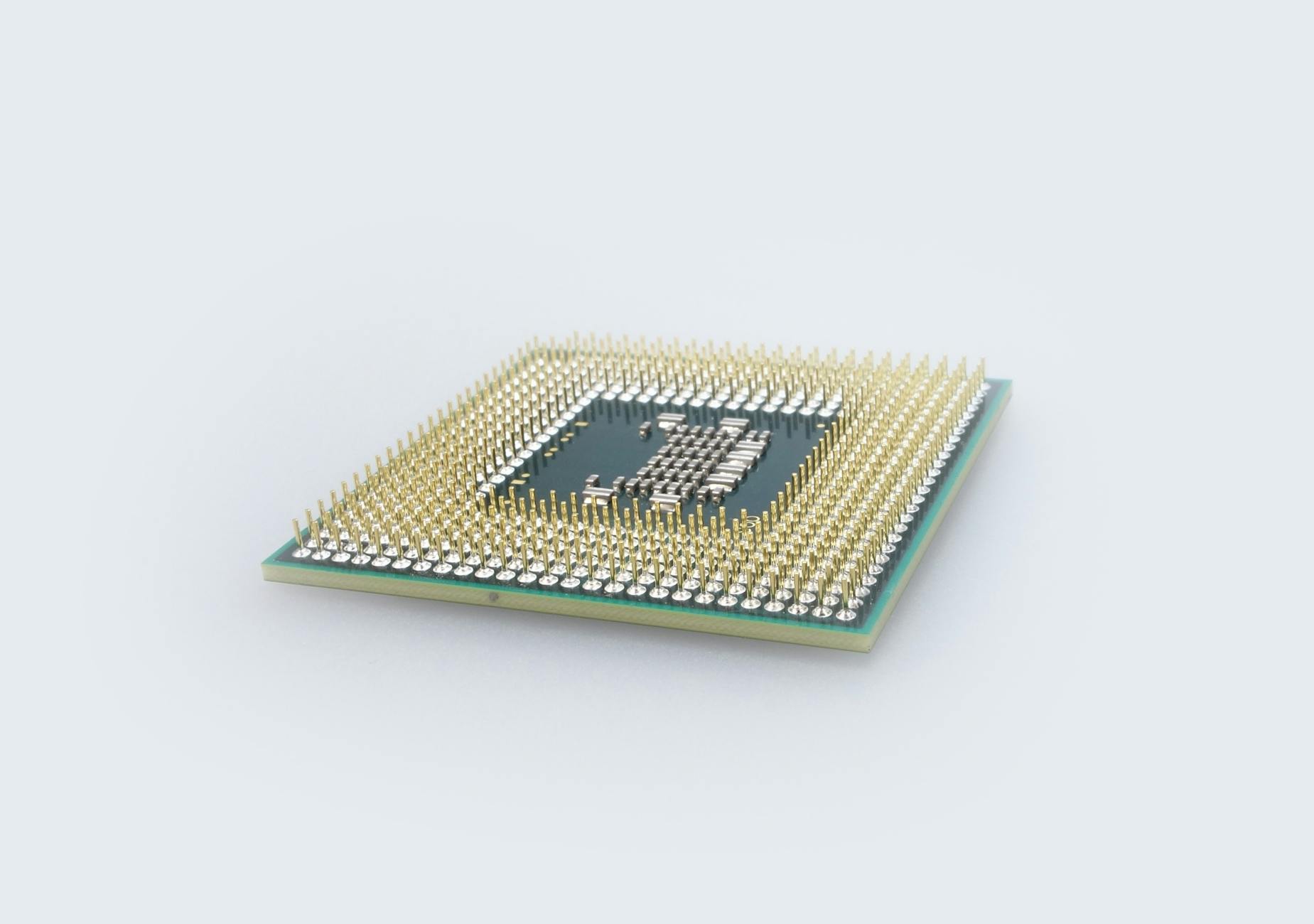
Where Small Language Models Genuinely Win
Three advantages are real and one is mostly marketing.
Latency is the strongest case. A local model answers in tens of milliseconds with no network round trip. For keyboard prediction, on-the-fly redaction, or UI assistance, that difference is the product.
Privacy is the second. Data that never leaves the device removes an entire category of compliance argument. For health, legal, and enterprise-device use cases this alone justifies a weaker model.
Unit cost is the third. Inference on the user's hardware costs the vendor nothing per call. At a hundred million daily calls, that is a budget line rather than a rounding error.
The claim that does not hold up: that small models are approaching frontier quality on general tasks. They are not, and a distilled 3-billion-parameter model that matches a frontier model on a narrow benchmark will not match it on anything else. Reading those comparisons carefully is its own skill, covered in our guide to what benchmark scores actually measure.

Which Hardware Constraints Actually Decide On-Device Performance?
Memory bandwidth, not raw compute, decides how fast a small language model runs on a phone or laptop. Every generated token requires reading the model's full weights from memory, so throughput comes out to roughly bandwidth divided by model size, well before thermal limits or battery drain even become a factor.
Work through it. A 4 GB model on a device with 60 GB/s of usable bandwidth tops out near 15 tokens per second in the ideal case, before any other app touches memory. That is readable but not fast.
Drop to a 2 GB model on the same device, and that ceiling roughly doubles. This is the actual lever teams have: shrinking the model buys speed in a way that upgrading the chip usually cannot, since most consumer devices are bandwidth-constrained long before they are compute-constrained.
| Constraint | Practical effect | Typical mitigation |
|---|---|---|
| Memory bandwidth | Caps tokens per second | Smaller model, lower precision |
| RAM ceiling | Model competes with the OS | Quantization, partial offload |
| Thermal limits | Sustained speed drops | Short bursts, background batching |
| Battery draw | Feature gets disabled by users | Task-specific tiny models |
Neural accelerators help less than their spec sheets suggest. A dedicated NPU improves energy per operation, but if weights still stream from shared memory, the bandwidth ceiling stays where it was.
Thermal throttling is the constraint that surprises teams. A model that benchmarks well for 30 seconds runs 40 percent slower after three minutes of sustained use, which is exactly when a user is doing something real with it.
The energy angle scales up too. Datacenter electricity consumption reached roughly 415 terawatt-hours in 2024, about 1.5 percent of global demand, according to the International Energy Agency (IEA) analysis of energy and AI. Moving routine inference to devices that are already powered on is one of the few structural ways to bend that curve.

What Quantization Actually Costs
Quantization reduces the precision of weights from 16-bit to 8-bit or 4-bit, cutting memory proportionally. It is standard practice for on-device deployment, and it is not free.
Four-bit quantization typically preserves most performance on straightforward generation and degrades noticeably on arithmetic, long-chain reasoning, and rare-token handling. The loss is task-dependent, which means benchmark averages hide it.
Test on your own task before and after. In the deployments Emergent Wire has looked at, the quality drop that mattered was almost never the one the general benchmark flagged.
One team we spoke with quantized a model handling invoice extraction and saw no change on their general benchmark suite. Production numbers dropped anyway, because the failure showed up specifically on five- and six-digit totals, a case the benchmark never tested, and nobody caught it until a customer flagged a mismatched invoice total three weeks after the rollout.
A practical rule: if your task involves numbers, structured output, or a domain vocabulary, measure the quantized model specifically on those inputs. Averages will tell you it is fine.

The Hybrid Pattern Most Teams Land On
The architecture that has stabilized in 2026 is a local model for routine work with an escape hatch to the cloud.
- Classify the request locally. A small model decides whether this is simple or hard, which costs almost nothing.
- Handle the simple majority on device. Extraction, formatting, short summaries, intent routing.
- Escalate the hard tail. Long reasoning, multi-step tasks, anything requiring current information.
- Log the split. The escalation rate tells you whether the local model is earning its place.
Offline behavior is the other reason this pattern wins. A local model that degrades gracefully with no connection keeps a feature usable on a plane or a job site, which is a product argument rather than a cost one.
Warehouse and field-service teams tend to notice this first, since they are the ones losing a feature entirely the moment a connection drops. A cloud-only design fails completely offline. A hybrid one just gets slower and dumber, which users tolerate far better.
Escalation rate is the metric worth watching. If 60 percent of requests go to the cloud anyway, the local model is adding complexity and latency without removing cost.
This split mirrors the broader serving economics, where the goal is to spend frontier-scale compute only where it changes the answer. That pressure is the same one driving the datacenter buildout covered in our reporting on why power, not chips, is the binding constraint, and the reason a sparse architecture matters is explained in our piece on how mixture of experts models cut compute per token.
The Practical Read on On-Device AI
Small language models are the right answer for narrow, high-frequency, latency-sensitive work where the data should not travel. They are the wrong answer for anything open-ended, and quantization does not close that gap.
Start by measuring memory bandwidth on your target device and the escalation rate on your actual traffic. Those two numbers will tell you whether on-device AI is viable for your case faster than any benchmark will. Emergent Wire covers small models on those terms because the constraint is almost always the hardware, not the model.
Emergent Wire covers AI models, capabilities, and the industry building them.